I Survived Y2K…I Can Survive AI
By Denise Smallwood
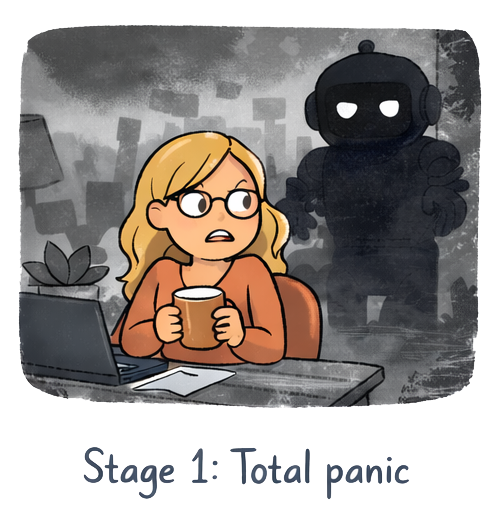
When 2025 began, my understanding of AI was basically: This is how the world ends. Not in a subtle way, either. In my imagination, once AI really took off we’d all be either dead or wandering through a sci-fi wasteland—barren, smoky, and somehow always in black and white. So no, I wasn’t exactly thinking, How will this impact my business? Why bother planning a marketing strategy when we’re all headed for robot doom?
But then—drip by drip—AI started showing up anyway. Not as an apocalypse. More like an uninvited houseguest that keeps quietly moving into different rooms. First it was ChatGPT. Someone told me, “Just type in a few sentences and it’ll spit out something polished and professional.” My first thought was: Well… there go our brochures. If everyone can write like we do, what’s the point? Then I heard AI could make photos look crisp and clean. Great. Now nobody needs professional photography either. As each new AI “feature” landed, I met it with the same emotional cocktail: panic, dread, and a little bit of internal screaming. Virtual staging? Bye-bye. Copywriting? Gone. Editing? Next. Basically, everything we do would be replaced and I’d be forced to either find a new career or retire early—neither of which sounded fun, especially because I love what I do. And with 60 coming at me faster than I’d like, the idea of reinventing myself from scratch felt…exhausting.
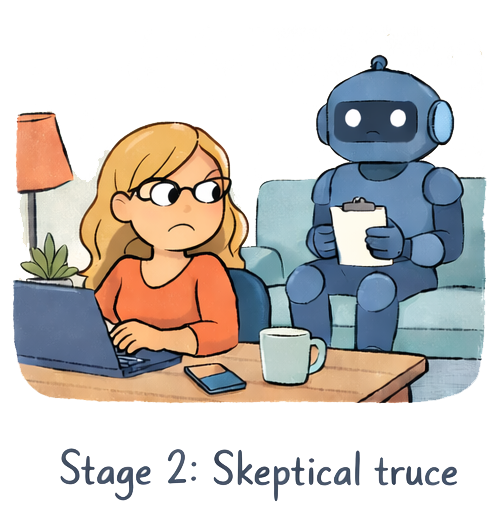
Then, around mid-2025, I did something I swore I wouldn’t do: I tried it. It started with our website redesign. Writing all those service descriptions felt like bailing out a sinking boat with a coffee mug. So I tossed my notes into ChatGPT, held my breath, and said a small prayer. And guess what? It gave me something… pretty good. Not perfect. Not “publish it and walk away” good. But good enough to get me moving. It turned the blank page into a rough draft—and that alone was a huge shift. And once I saw that, I thought: If it can help with this, could it help with brochures, too? So we tested it. We fed it info. It gave us something workable. It wasn’t always as accurate as we need (we’re picky for a reason), but it absolutely sped up the first draft process and made revisions easier.
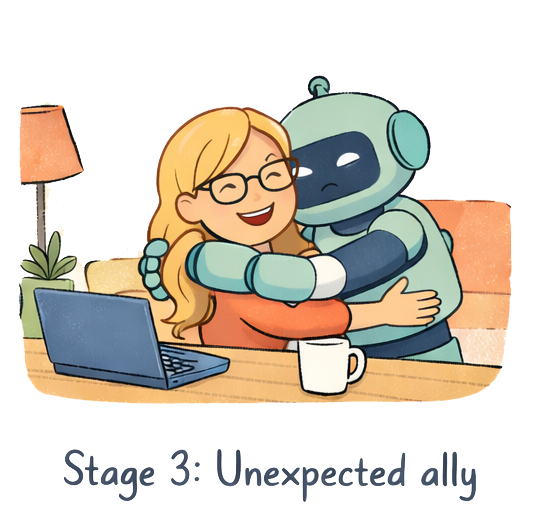
Then we tried it on photos. The results were…honestly, impressive. They still needed our professional touch, but the starting point was stronger—and that meant less time wrestling with the basics and more time refining the final look. And that’s when the pattern clicked: AI wasn’t replacing us. It was taking the first swing—and letting us focus on the finishing work. Virtual staging still isn’t at my standards from scratch, but it’s fantastic at editing staged photos. Now I don’t worry about limited inventory or “I wish that sofa came in red.” I upload the staged image to Nano Banana, tell it what I want, and—voilà—problem solved. Turn still photos into video? Sign me up. Take a picture of my pantry and get dinner ideas? Also yes. Make Christmas shopping easier for those “impossible to buy for” people? Yes again.
So here I am, stepping into 2026 with my arms wide open to AI. Do I trust it completely? Absolutely not. I’ve learned the hard way that everything needs to be fact-checked, and the output still needs a human brain to steer it toward what’s true, on-brand, and actually useful. Because AI has one major design flaw—and it’s a big one: It was never properly trained to say, “I don’t know.” And once you understand that, you stop fearing it…and start using it like what it really is: A powerful tool that still needs a professional behind the wheel.